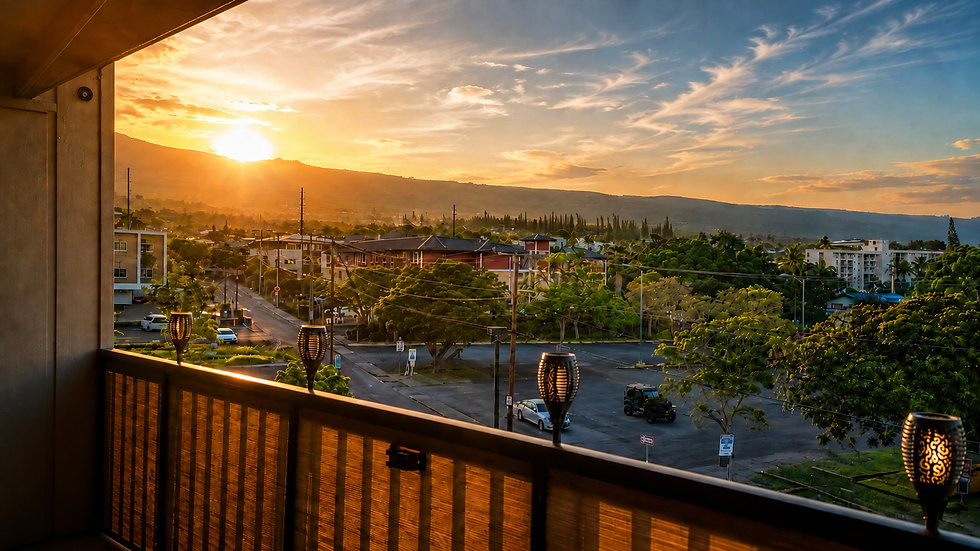
A Walking Guide to Historic Kailua Village: Landmarks, History & Waterfront Stops

Historic Kailua Village is easy to experience as a line of restaurants, shops, and ocean views along Aliʻi Drive. Look more closely, however, and the waterfront reveals a much deeper story: royal residences, sacred places, early political change, the arrival of Christian missionaries, and buildings that preserve important chapters of Hawaiʻi’s history.
This self-guided walk connects several of the village’s most significant landmarks in a compact route that begins just outside Kona Vista Paradise. You can complete the main walk in about an hour if you mostly view sites from outside, or spend several hours when you include a palace tour, museum time, shopping, lunch, and a beach stop.
Historic Kailua Village walking guide at a Glance
Suggested order:
• Kona Vista Paradise and the pedestrian shortcut to Aliʻi Drive
• Mokuʻaikaua Church
• Huliheʻe Palace
• The Kailua Bay waterfront
• Kailua Pier
• Kamakahonu and Ahuʻena Heiau
• Kamakahonu Beach
• Aliʻi Drive shops and Kona Inn Shopping Village
The central landmarks are close together, but allow extra time for street crossings, photographs, interpretive signs, and simply enjoying the bay.
Begin Beside Mokuʻaikaua Church
From Kona Vista Paradise, the pedestrian shortcut beside the property brings you to Aliʻi Drive in about a minute. You emerge directly across from the ABC Store at Kona Inn Shopping Village, with Mokuʻaikaua Church immediately beside the property and Huliheʻe Palace across the street.
That unusual location makes the beginning of the walk especially striking. Before you have travelled even one block, you are standing between two of Historic Kailua Village’s most recognizable buildings.
The shortcut includes stairs. Guests who need a step-free route should use the regular street access and choose crossings according to their mobility needs.
Stop 1: Mokuʻaikaua Church
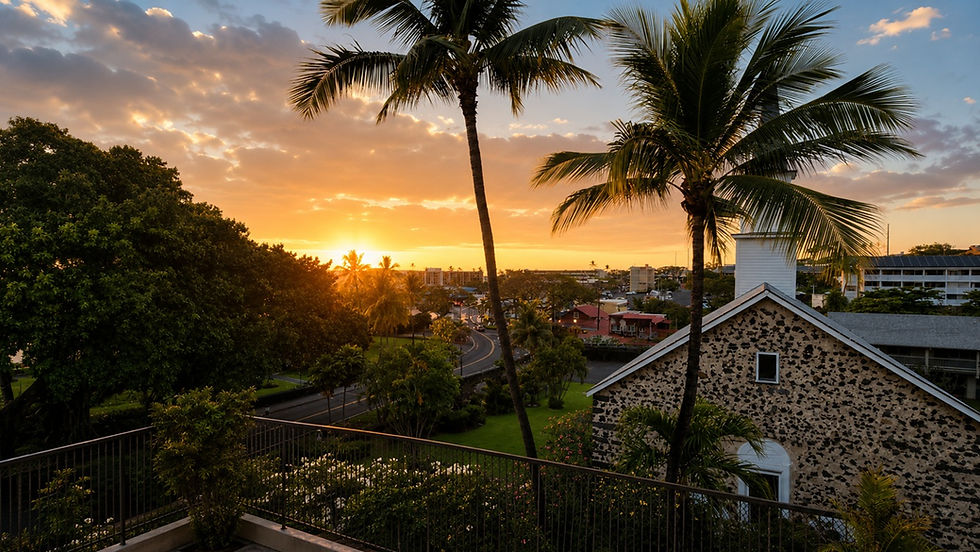
Mokuʻaikaua is widely recognized as Hawaiʻi’s first Christian church. The congregation dates to the arrival of American Protestant missionaries in 1820, while the present stone building was begun in 1835 and dedicated in early 1837.
The structure reflects a period of rapid transformation in Hawaiʻi. Its walls were built with lava stone and mortar, while large ʻōhiʻa timbers were used in the roof and interior. Governor John Adams Kuakini oversaw construction of both Mokuʻaikaua Church and Huliheʻe Palace across the road.
The church remains an active place of worship rather than simply a museum. Visitors should enter only when the building is open, speak quietly, avoid interrupting services or private activities, and check the church’s current schedule before planning an interior visit.
Look for:
• The tall steeple that has long served as a landmark from land and sea
• The stone memorial arch facing Aliʻi Drive
• The lava-rock walls and large wooden structural elements
• Historical displays when the church is open to visitors
Stop 2: Huliheʻe Palace

Cross Aliʻi Drive to Huliheʻe Palace, an oceanfront residence built by Governor John Adams Kuakini from lava rock. It later became a favored retreat for members of Hawaiʻi’s royal families and now operates as a museum.
Inside, the palace interprets Hawaiʻi’s royal past through furnishings, portraits, featherwork, kapa, quilts, decorative objects, and other historic collections. The rooms and broad oceanfront lanais also help visitors imagine how the building functioned as both a private residence and a place connected to the political and social life of the Hawaiian Kingdom.
Even when you do not take a tour, pause at the grounds and view the palace from Aliʻi Drive and the waterfront. The building’s position directly across from Mokuʻaikaua Church visually captures how closely several major changes in nineteenth-century Hawaiʻi unfolded within the same small area.
Tours, walk-in availability, events, and admission arrangements can change. Check Huliheʻe Palace’s official information before visiting. The historic building includes stairs, although staff may be able to discuss alternative arrangements for guests with mobility limitations.
Continue Along the Kailua Bay Waterfront
From Huliheʻe Palace, turn north and continue along Aliʻi Drive toward Kailua Pier. The route follows Kailua Bay, with ocean views opening between buildings, walls, and public access points.
Modern Kailua-Kona can feel relaxed and resort-oriented, but this shoreline was once closely connected to royal government, fishing, canoe travel, religion, trade, and community life. Walking slowly helps the pieces fit together: the palace, church, bay, pier, and Kamakahonu royal compound are not isolated attractions. They form one connected historic landscape.
This section is also a good place to pause for water or coffee. Shade can be limited, and the combination of sun, reflected heat, and humidity can make a short distance feel longer than expected.
Stop 3: Kailua Pier
Kailua Pier is now associated with cruise-ship tenders, fishing boats, paddling, community events, and the start and finish of the IRONMAN World Championship. Historically, the waterfront also served as an important landing and transport point.
Walk toward the end only where public access is permitted, and stay clear of active vessel operations. From the pier area, look back across the water and shoreline to understand why Kailua Bay became such an important center. The protected landing, nearby royal compound, and surrounding settlement placed political authority and ocean transportation in the same location.
The pier also provides one of the clearest views toward Kamakahonu and the reconstructed Ahuʻena Heiau.
Stop 4: Kamakahonu and Ahuʻena Heiau

At the northern edge of Kailua Bay is Kamakahonu, the final residence of Kamehameha I and once a center of government for the Hawaiian Kingdom. The royal compound included residences, storage and work buildings, walls, and Ahuʻena Heiau, Kamehameha’s personal place of worship and counsel.
Kamehameha I lived here during the final years of his life and died at Kamakahonu in 1819. The site is also associated with the political and religious changes that followed, including the ending of the kapu system and the arrival of the first American Protestant missionaries in 1820.
The visible Ahuʻena Heiau is a reconstruction created through historical and archaeological research. It remains a culturally significant place, not a decorative resort feature. View it respectfully from permitted public areas, obey signs and boundaries, and do not enter restricted spaces or climb on walls and structures.
This stop adds important context to the church and palace you just visited. Within a short waterfront walk, you can see places connected to Kamehameha I, the transition after his death, the arrival of missionaries, and the later royal life represented at Huliheʻe Palace.
Stop 5: Kamakahonu Beach
Beside Kailua Pier is Kamakahonu Beach, a small crescent of sand that provides a pleasant break in the historical walk. Depending on conditions, visitors may swim, wade, paddle, or simply sit near the bay and watch boats move through the water.
The beach is also a useful reminder that Hawaiian history cannot be separated from the ocean. Canoe travel, fishing, trade, ceremony, settlement, and political authority were all shaped by the coastline.
Treat this as an optional rest stop rather than a required part of the route. Check current water conditions, keep clear of boat traffic and operations, and follow all posted guidance.
Walk Back Through the Village
Return south along Aliʻi Drive at an easy pace. You can revisit the palace and church from the opposite direction, stop at galleries and shops, or choose a waterfront restaurant for lunch.
Kona Inn Shopping Village is directly across from the pedestrian shortcut back to Kona Vista Paradise, making it a convenient final stop. From there, guests can return to the penthouse within about a minute instead of finishing the walk with a long climb or drive.
For a longer outing, continue farther south along Aliʻi Drive toward the Kona Farmers Market and other village businesses before turning back.
How These Landmarks Connect
The value of this walk is not simply checking several attractions off a list. The sites help reveal a sequence of major changes in Hawaiʻi:
Kamakahonu and Ahuʻena Heiau connect the village to Kamehameha I, royal government, traditional religion, and the final years of the king who unified the islands.
Mokuʻaikaua Church reflects the arrival and growing influence of American Protestant missionaries after 1820.
Huliheʻe Palace preserves the material and domestic world of later Hawaiian royalty during the nineteenth century.
Kailua Bay and the pier show why this location functioned as a natural gathering point for people, vessels, political authority, commerce, and community life.
Seeing these places on foot makes their proximity, and the speed of the historical changes they represent, much easier to understand.
Optional Ways to Add More Context
Historic Kailua Village offers additional resources for visitors who want more than a self-guided walk.
The Royal Footsteps Along the Kona Coast scenic byway extends for roughly seven miles along Aliʻi Drive and includes many more archaeological, historical, and cultural locations. The Historic Kailua Village organization also provides the Kona Royal Guide smartphone app with mapped points of interest and interpretive information.
Free guided historic walking tours are sometimes offered through Historic Kailua Village. Dates and availability change, so check the official event calendar rather than assuming a tour will run during your stay.
A guided tour or museum visit can add Native Hawaiian names, relationships, political context, and stories that are difficult to capture in a short walking article.
Practical Tips for the Walk
• Start earlier in the day when temperatures are cooler.
• Carry water, sun protection, and comfortable walking shoes.
• Use marked crossings along Aliʻi Drive and watch for turning vehicles.
• Check current opening hours before planning an interior palace or church visit.
• Remember that Mokuʻaikaua is an active church and Ahuʻena Heiau is a culturally significant place.
• Respect signs, ceremonies, private property, and restricted areas.
• Allow more time than the map suggests; the best part of this walk is stopping to look closely.
• Guests who cannot use the stair shortcut should plan a step-free route from the property’s regular entrance.
A Walk Through the Heart of Kona
Historic Kailua Village is compact, but the story held within these few blocks is much larger than the distance suggests. Royal power, traditional religion, missionary influence, political transformation, ocean travel, and everyday community life all intersect along the same waterfront.
Beginning from Kona Vista Paradise allows you to experience that history without finding parking or organizing transportation. Step outside, reach Aliʻi Drive within minutes, explore some of Hawaiʻi Island’s most important landmarks, enjoy the waterfront, and return home whenever you are ready.
Make Kona Vista Paradise Your Home Base
Kona Vista Paradise places a spacious three-bedroom penthouse beside the historic heart of Kailua-Kona. Mokuʻaikaua Church is next door, Huliheʻe Palace is across Aliʻi Drive, and Kailua Bay, the pier, Kamakahonu, restaurants, shops, and the waterfront are all within an easy walk.
That means Historic Kailua Village is not simply somewhere you drive to during your vacation. It becomes part of your neighborhood, and a place you can revisit for a morning walk, museum visit, dinner, sunset, or quiet moment beside the bay.