10 Best Snorkeling Spots on the Big Island of Hawaiʻi

Hawaiʻi Island offers an unusually wide range of snorkeling experiences, from protected nearshore reefs and sheltered lagoons to boat-access coves, lava-rock entries, and quiet bays along the Kohala Coast.
The “best” spot depends on more than the number of fish. Entry difficulty, facilities, driving distance, seasonal surf, visibility, swimming ability, and the needs of your group all matter. A beautiful reef is not a good choice when the water is rough, the entry is beyond your ability, or someone in the group is uncomfortable.
This guide to the best snorkeling spots on the Big Island compares ten of the island’s most useful snorkeling destinations rather than ranking them by reef quality alone. Some are best for beginners, some for stronger swimmers, some for families, and some for visitors already exploring Hilo or the Kohala Coast.
Ocean conditions, access, closures, lifeguard coverage, and facilities can change. Check current conditions before entering the water, speak with lifeguards when they are present, and never snorkel alone.

The 10 Best Snorkeling Spots on the Big Island at a Glance
1. Kahaluʻu Beach Park — best all-around choice for many first-time snorkelers
2. Kealakekua Bay — best major boat-access reef experience
3. Hōnaunau Bay, often called Two Step — best for confident snorkelers comfortable with a lava-rock entry
4. Waialea Bay, known locally as Beach 69 — best protected marine area on the northwestern coast during calm conditions
5. ʻAnaehoʻomalu Bay — best combination of snorkeling, beach facilities, and a Kohala Coast resort setting
6. ʻŌhaiʻula, also known as Spencer Beach Park — best family-oriented Kohala option
7. Kamakahonu Beach — best easy practice area near downtown Kailua-Kona
8. ʻAiʻōpio and Honokōhau Beach — best combination of coastal history, wildlife viewing, and condition-dependent snorkeling
9. Richardson Ocean Park — best-known snorkeling destination on the Hilo side
10. Carlsmith Beach Park — best sheltered lava lagoon experience near Hilo
This is not a strict one-through-ten ranking. The right spot for your group may be number seven rather than number one.
Before Choosing a Snorkeling Spot
Ask four questions before setting out:
• What are the current surf, wind, visibility, and closure conditions?
• Is there a lifeguard, and is the group staying within the guarded area?
• Can everyone enter and exit comfortably without being pushed across rock or coral?
• Does the location match the least experienced swimmer in the group?
Morning often provides more flexibility, but time of day alone does not guarantee safe water. Conditions can vary around the island and change quickly.
Use a properly fitted mask, snorkel, and fins. Stay with a buddy, remain close enough to communicate, and turn back before becoming tired. Snorkeling can feel easy while your face is in the water, so people sometimes travel farther than they can comfortably swim back.
Do not stand on coral, touch or chase wildlife, feed fish, remove natural material, or block an animal’s path. Give sea turtles, monk seals, dolphins, manta rays, and other wildlife generous space.
1. Kahaluʻu Beach Park

Best for: first-time visitors, reef education, facilities, and a convenient Kona location
Kahaluʻu Beach Park is one of the island’s most practical snorkeling choices. It is located south of downtown Kailua-Kona along Aliʻi Drive and combines a shallow nearshore reef with parking, restrooms, showers, picnic facilities, and lifeguards during posted hours.
The bay is known for reef fish, coral habitat, and frequent educational outreach. When reef educators are present, take advantage of the opportunity to ask about current conditions, appropriate entry areas, wildlife distance, and reef-safe behaviour.
Kahaluʻu is often recommended to beginners, but “beginner-friendly” does not mean risk-free. The shoreline is rocky, waves and current can still develop, and shallow coral creates places where careless swimmers may accidentally kick or stand on the reef.
The park may also close temporarily for maintenance, weather, ocean hazards, or coral-spawning protection. Confirm that it is open before making the drive.
Why choose it:
• More visitor support than most remote snorkeling entries
• Close to Kailua-Kona and Keauhou
• A useful place to learn reef etiquette
• Suitable for mixed groups when conditions are calm
What to know:
• Enter only where conditions and local guidance indicate
• Avoid standing on the reef, even in shallow water
• Arrive early because parking can fill
• Respect temporary coral-rest periods and closures
2. Kealakekua Bay

Best for: a guided boat trip and one of the island’s most memorable reef settings
Kealakekua Bay is both a Marine Life Conservation District and one of Hawaiʻi Island’s most historically significant places. The waters near the Kaʻawaloa side of the bay are known for coral and abundant fish, particularly during calm conditions.
The most famous snorkeling area is not directly accessible by car. For most visitors, the responsible and practical way to experience it is through an authorized boat operator. A guided trip removes the need to attempt a difficult shoreline approach and gives visitors equipment, local knowledge, and a defined return schedule.
The road-accessible Nāpōʻopoʻo side offers views across the bay and access to the historical park area, but there is no lifeguard there and it should not be treated as an automatic beginner entry.
Kealakekua is also culturally important. Learn about the bay rather than viewing it only as an underwater attraction, and follow all conservation and boating rules.
Why choose it:
• Excellent marine-life potential
• A major scenic and historical destination
• Guided boat access is available
• Works well as the centerpiece of a South Kona day
What to know:
• Use an authorized operator for the Kaʻawaloa snorkeling area
• Do not assume the car-accessible shoreline is suitable for your group
• There are no lifeguards at Nāpōʻopoʻo
• Fish feeding and removal of marine or geological material are prohibited within the conservation district
3. Hōnaunau Bay, Often Called Two Step

Best for: confident snorkelers comfortable entering from lava rock
Hōnaunau Bay sits immediately outside Puʻuhonua o Hōnaunau National Historical Park. The popular snorkeling entry is commonly called Two Step because of the naturally worn lava ledges used to enter the water.
It is important to understand that the snorkeling area is outside the national park. Snorkeling is not permitted along the sacred shoreline within Puʻuhonua o Hōnaunau itself, and the park entrance fee is for visiting the park, not for using the adjacent bay.
When conditions are calm, Hōnaunau can offer clear water and rewarding marine life. The entry, however, can become difficult when surge moves across the rock. There is no broad sandy beach, and getting out may be harder than getting in.
This location is better for capable swimmers who can assess the entry and wait their turn without crowding the ledges. Beginners should not choose it simply because it appears on popular travel lists.
Why choose it:
• Clear South Kona water during suitable conditions
• Strong marine-life potential
• Easy to combine with a respectful visit to Puʻuhonua o Hōnaunau
What to know:
• The snorkeling site is outside the national park
• The lava-rock entry can be slippery and affected by surge
• Do not enter when you are uncertain about exiting
• Keep the boat-ramp area clear and follow local rules
4. Waialea Bay, Also Known as Beach 69

Best for: marine diversity on the northwestern coast during calm summer conditions
Waialea Bay is a Marine Life Conservation District south of Hāpuna. It is locally known as Beach 69 because the access road turns near utility-pole markers 69 and 70.
The bay contains coral communities around its rocky areas, and the state describes its marine diversity as among the best in Kawaihae Bay. The strongest reef habitat is generally associated with the southern portion of the conservation district.
Waialea is partly sheltered, but winter surf can become high and freshwater runoff can reduce visibility. The access road is rough, facilities are absent, and there are no lifeguards.
This is a good example of why a “best snorkeling” list should not be treated as a promise. On a calm day it may be a highlight; during strong surf or poor visibility, it is not the right choice.
Why choose it:
• Protected marine habitat
• Strong marine diversity
• Shade and a more natural beach atmosphere
• A useful Kohala Coast alternative when conditions are calm
What to know:
• No lifeguards or facilities
• Access is rougher than at developed beach parks
• Winter surf can be hazardous
• Do not feed fish or remove marine life, coral, sand, or geological material
5. ʻAnaehoʻomalu Bay

Best for: combining snorkeling with a developed beach day
ʻAnaehoʻomalu Bay, often shortened to “A-Bay”, fronts the Waikoloa resort area on the Kohala Coast. It offers parking, restrooms, a picnic area, water-activity services, a palm-lined beach, and nearby resort amenities.
The official visitor information identifies the northern edge as the better area for snorkeling visibility. The bay also has historic fishponds nearby, giving the visit more context than a simple beach stop.
A-Bay is a practical choice for groups who want one person to snorkel while others relax on the beach, walk, or use other water activities. It is also an attractive sunset location.
Visibility and water movement still vary. Stay close to shore and within your abilities, especially when wind develops later in the day.
Why choose it:
• Developed facilities and easy beach-day logistics
• Snorkeling, walking, and other activities in one place
• Useful for groups with different interests
• Good sunset potential
What to know:
• The northern edge is generally the better snorkeling area
• Resort surroundings do not remove normal ocean hazards
• Watch for watercraft and stay within designated areas
• Conditions can become less comfortable as wind increases
6. ʻŌhaiʻula, Also Known as Spencer Beach Park

Best for: families and a calmer Kohala Coast outing
ʻŌhaiʻula, commonly called Spencer Beach Park, lies below Puʻukoholā Heiau National Historic Site near Kawaihae. An offshore reef helps protect the beach, creating calm swimming and snorkeling water on many days.
The park includes restrooms, picnic facilities, and other family-friendly amenities. Lifeguards are generally present on weekends and holidays during posted hours, but visitors should verify current coverage.
Spencer is not necessarily the island’s most spectacular reef. Its strength is the overall experience: a manageable beach, useful facilities, shade, cultural sites nearby, and water that may suit a family group better than a difficult lava-rock entry.
Why choose it:
• Protected setting on many days
• Family-oriented facilities
• Easy to combine with Puʻukoholā Heiau
• A calmer alternative to more exposed Kohala beaches
What to know:
• Lifeguard schedules are limited and may change
• Calm appearance does not eliminate current or wave risk
• Marine visibility varies
• Keep children within immediate reach near the water
7. Kamakahonu Beach

Best for: a gentle introduction near downtown Kailua-Kona
Kamakahonu is the small beach beside Kailua Pier in Historic Kailua Village. Its central location makes it one of the easiest places for guests staying downtown to reach.
The sheltered setting can be useful for becoming comfortable with a mask, checking equipment fit, or taking a brief swim before choosing a larger reef experience. The area is also close to Kamakahonu, Ahuʻena Heiau, Kailua Pier, restaurants, and other historic village stops.
This is not the place to expect the island’s most extensive coral reef. Its value is accessibility and convenience. Boat traffic, pier activity, event schedules, and water quality can affect where and when swimming is appropriate.
Why choose it:
• Walkable from Kona Vista Paradise
• Convenient for a brief practice session
• Easy to combine with Historic Kailua Village tour
• Nearby food, shops, and services
What to know:
• Stay out of boat-traffic areas
• Follow all posted instructions around the pier
• Treat it as an introduction rather than a major reef expedition
• Check conditions and water advisories before entering
8. ʻAiʻōpio and Honokōhau Beach

Best for: coastal history, wildlife observation, and a quieter park experience
Honokōhau Beach lies within Kaloko-Honokōhau National Historical Park, north of Kailua-Kona. The park protects fishponds, fishtraps, archaeological features, coastal habitat, and living Hawaiian cultural traditions.
On calm days, the National Park Service notes that visitors may enjoy snorkeling near ʻAiʻōpio Fishtrap. Sea turtles are also frequently observed feeding or resting along the coast.
This is not a simple park-and-jump-in location. Visitors walk to the shoreline, facilities near the beach are limited, footing can be uneven, and there is no typical developed resort-beach setup. The cultural landscape deserves as much attention as the water.
Choose this stop when your group values history, walking, wildlife observation, and a quieter shoreline. Snorkeling should remain optional and condition-dependent.
Why choose it:
• Combines marine habitat with Hawaiian cultural history
• Opportunities to observe sea turtles from a respectful distance
• Less commercial atmosphere
• Close to Kailua-Kona but feels removed from town
What to know:
• Expect a walk to the beach
• Carry water and sun protection
• Do not approach, touch, block, or follow resting wildlife
• Enter the water only during calm conditions and within your ability
9. Richardson Ocean Park

Best for: the best-known snorkeling experience on the Hilo side
Richardson Ocean Park is east of downtown Hilo along Kalanianaʻole Avenue. The shallow bay fronting Richardson Ocean Center is widely identified as the east side’s most popular snorkeling location.
The setting differs from Kona. East Hawaiʻi receives more rain, visibility can be affected by weather and runoff, and the coastline has a greener, darker character. The park has restrooms and an ocean-education facility, though operating schedules and programs should be checked in advance.
Richardson is a sensible addition when you are already spending time in Hilo. It is generally not worth driving across the entire island solely to replace a calm Kona snorkeling morning.
Why choose it:
• Hilo’s best-known snorkeling area
• Distinctive East Hawaiʻi scenery
• Ocean-education opportunities may be available
• Easy to combine with a Hilo day
What to know:
• Rain and runoff can reduce visibility
• Conditions on the east side differ from Kona
• Use caution around lava rock and tide pools
• Check current park and ocean information before entering
10. Carlsmith Beach Park

Best for: a protected lava-lagoon experience near Hilo
Carlsmith Beach Park is another East Hawaiʻi option along Kalanianaʻole Avenue. Rather than a conventional sandy beach, it features protected lagoon-like water bordered by lava rock.
The county identifies the park for swimming and snorkeling, with restrooms, pavilions, showers, and drinking water. Lifeguard coverage is offered during certain weekends, holidays, and seasonal periods, but the schedule can change.
Carlsmith can work well for visitors seeking a gentler Hilo-area water experience. Freshwater mixing may make parts of the lagoon feel cooler or create shifting clarity.
Why choose it:
• Sheltered lagoon atmosphere
• Useful facilities
• Convenient during a Hilo itinerary
• Different experience from the open Kona coast
What to know:
• Lifeguards are not present at all times
• Lava-rock footing can be slippery
• Freshwater mixing can affect temperature and visibility
• Give turtles and other wildlife plenty of room
Which Spot Is Best for You?
For a first snorkeling experience:
• Kahaluʻu Beach Park when open and calm
• Kamakahonu for equipment practice
• Spencer Beach Park for a family-oriented Kohala day
For stronger swimmers:
• Hōnaunau Bay during suitable conditions
• Waialea Bay during calm periods
• ʻAiʻōpio when the water is appropriate
For a guided experience:
• Kealakekua Bay by authorized boat tour
For a full beach day:
• ʻAnaehoʻomalu Bay
• Spencer Beach Park
• Waialea Bay when conditions are suitable
For visitors already exploring Hilo:
• Richardson Ocean Park
• Carlsmith Beach Park
For a three-day Kona trip:
Prioritize Kahaluʻu, a guided Kealakekua Bay trip, or Hōnaunau Bay if your experience level and the conditions are appropriate. Do not spend half a vacation driving to every location on the list.
A Note About Manta-Ray Night Snorkeling
Kona is also known for guided manta-ray night snorkeling. That experience is different from independent beach snorkeling and should be booked through a reputable professional operator.
Ask about flotation support, guides in the water, boat procedures, equipment, physical requirements, weather cancellation policies, and how the company avoids touching, feeding, or disrupting manta rays.
Night snorkeling should not be improvised from shore.
Reef and Wildlife Etiquette
A good snorkeling visit should leave the place unchanged.
• Never stand or walk on coral
• Keep fins away from the reef
• Do not touch, chase, surround, or ride marine animals
• Never feed fish or other wildlife
• Leave shells, rocks, sand, and marine life where they are
• Secure loose equipment so it does not drag across the bottom
• Use shade and protective clothing to reduce reliance on products that can wash into the water
• Follow all rules in Marine Life Conservation Districts, national parks, and county parks
When a turtle or other animal approaches, remain calm and allow it to choose its path. An encounter is more meaningful when it happens without pursuit.
Essential Ocean-Safety Reminders
Snorkel with a buddy and remain close enough to help one another.
Choose the site for the weakest swimmer, not the strongest.
Speak with lifeguards when available and follow posted warnings.
Do not enter unfamiliar water because other visitors are already in it.
Avoid rocky entries when surge makes getting out uncertain.
Stop before becoming cold, tired, anxious, or short of breath.
Do not rely on an inflatable device as a substitute for swimming ability or supervision.
When the conditions do not look right, choose a beach walk, historical site, coffee farm, or another land-based activity. The reef will still be there on a better day.
Make Kona Vista Paradise Your Home Base
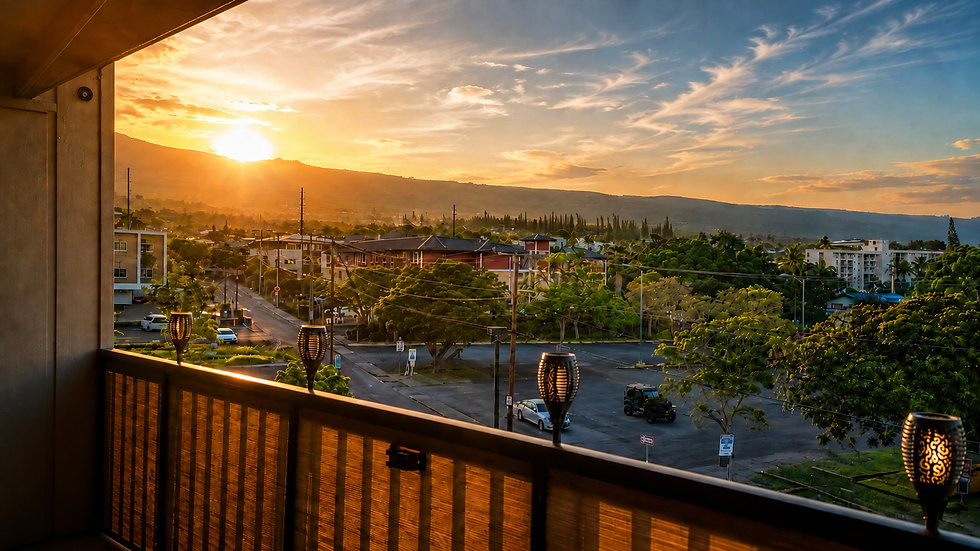
Kona Vista Paradise places you in downtown Kailua-Kona, within walking distance of Kamakahonu Beach, Kailua Pier, Historic Kailua Village, restaurants, shops, and the waterfront.
From the condo, Kahaluʻu is a short drive south, Kealakekua and Hōnaunau make natural South Kona excursions, and the Kohala Coast is an easy day trip to the north.
That central location lets you choose the snorkeling destination that matches the day’s conditions instead of committing the entire vacation to one distant resort area.
Explore the island, but let the ocean decide when it is time to get in.