

Kona Manta Ray Night Snorkel Guide: What to Expect, Safety & Booking Tips

A manta ray night snorkel is one of Kona’s most distinctive ocean experiences. After dark, operators use underwater lights to concentrate plankton, and reef manta rays may glide, turn, and feed beneath snorkelers floating at the surface.
The experience can be extraordinary, but it is still a nighttime open-ocean activity involving boats, darkness, waves, current, cold water, and wild animals. The best tour is not necessarily the cheapest one or the one with the most dramatic advertising. It is the tour that matches your swimming ability, health, comfort level, group size, departure location, and expectations.
This Kona manta ray night snorkel guide explains what to expect, how the experience works, what responsible operators should provide, which questions to ask before booking, and how to decide whether a manta ray night snorkel is right for you.
Manta sightings are never guaranteed. Ocean conditions, tour procedures, meeting points, age limits, health restrictions, and cancellation policies can change, so verify the current details directly with the operator before paying.

What Is a Kona Manta Ray Night Snorkel? A Quick Guide:
Kona’s manta experience is based on a simple food-chain effect.
Lights placed in or directed into the water attract and concentrate plankton. Reef manta rays feed by swimming through the plankton-rich water with their mouths open, filtering tiny organisms from the water.
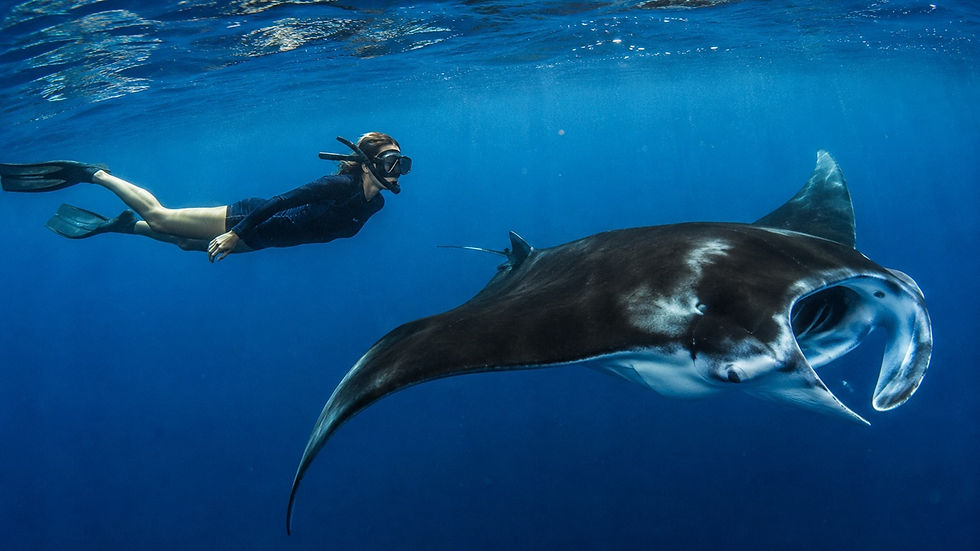
Snorkelers normally remain at the surface while holding onto a large illuminated float, light board, or similar device. The light shines downward, forming a bright area beneath the group. When mantas arrive, they may pass close below the surface as they feed.
The experience is passive. You are not meant to chase, touch, ride, surround, or dive down toward the mantas. The goal is to remain still, allow the animals to control the encounter, and watch from the surface.
Where Do Kona Manta Tours Operate?
Commercial tours generally use two established viewing areas along the Kona coast:
• The southern viewing area near Keauhou Bay
• The northern viewing area near Makako Bay, also known as Garden Eel Cove
Operators may use different informal names for these areas, including “Manta Village” and “Manta Heaven.”
The departure harbour does not always tell you exactly which viewing site will be used. Some operators leave from Keauhou Bay for the nearby southern site, while others depart from Honokōhau Harbor and travel to the northern site. Conditions, crowding, mooring availability, and operator procedures can affect the final location.
Ask these questions before booking:
• Which harbour or shoreline meeting point do you use?
• Which manta-viewing area do you normally visit?
• How long is the typical boat ride each way?
• Is the boat ride protected or exposed to open-ocean swell?
• How much total time is spent in the water?
• Does the operator ever change sites because of conditions?
A three-minute ride and a twenty-minute ride can feel very different to a nervous swimmer or someone prone to seasickness.
Boat Tour or Shore-Based Entry?

Most visitors choose a boat-based tour. It provides controlled transportation, dedicated crew, flotation equipment, and a defined group procedure.
A small number of experiences may use a shoreline or nearshore entry depending on the venue and current operator arrangements. Do not assume that avoiding a boat makes the activity easier. A shoreline entry may involve steps, rock, surge, darkness, and walking in equipment.
For a shore-based experience, ask:
• What is the entry surface?
• Are there stairs, lava rock, sand, or a ladder?
• How far must guests swim?
• Is flotation provided from the entry point?
• How are guests assisted back out of the water?
• What happens if the swell increases during the tour?
Choose based on the entire entry-and-exit process, not only the length of the boat ride.
What Usually Happens During the Tour?
Exact procedures vary, but a well-run tour generally follows this sequence.
1. Check-In and Screening
You meet the crew, complete waivers, confirm swimming ability, and receive equipment.
A responsible operator should ask meaningful questions about swimming experience, recent health problems, physical limitations, age, pregnancy, mobility, and comfort in dark open water. A company that accepts everyone without screening is not necessarily being more accommodating.
2. Safety and Wildlife Briefing
The guide should explain:
• How to use the mask and snorkel
• How to enter and exit the boat
• How to signal for assistance
• Where to hold the flotation device
• How the group stays together
• What to do if the mask leaks or you become anxious
• Why snorkelers must remain at the surface
• Why touching or pursuing manta rays is prohibited
• How the tour will end and how guests return to the boat
Listen closely even when you have snorkelled before. Nighttime procedures are different from a casual daytime beach snorkel.
3. Boat Ride to the Viewing Area
The ride may be very short or may involve open water. The crew should explain where to sit, what to hold, and how to move safely around the vessel.
4. Entry After Dark
Guests usually enter one at a time with crew assistance, then move directly to the light board or flotation device.
The first minute can be the hardest for an anxious guest. The water is dark beyond the lighted area, your breathing sounds louder through the snorkel, and the boat may feel farther away than expected.
Remain calm, establish a comfortable breathing rhythm, and tell the guide immediately when something feels wrong.
5. Surface Viewing
Snorkelers normally hold the board, float horizontally, and point their faces downward. Fins should remain near the surface and away from other guests.
When mantas appear, they may feed directly below the lights. They can seem extremely close because of their size and the clarity of the water.
Do not dive down, reach out, or move into their path.
6. Return to the Boat
The crew calls the group back, assists guests at the ladder or entry point, and collects equipment.
Climbing a ladder after floating in cool water can be more tiring than expected. Tell the crew before the tour when you need extra assistance.
Do You Need to Be a Strong Swimmer?
You should be a competent swimmer who is comfortable breathing through a snorkel in open water.
Hawaiʻi Ocean Safety advises that snorkelers should be experienced ocean swimmers. A flotation board can reduce effort, but it does not replace swimming ability, calm breathing, or the capacity to respond when conditions change.
Operator requirements vary. Some require previous snorkelling experience or the ability to swim a stated distance without flotation. Others accept beginners after instruction but still prohibit non-swimmers.
Be honest with yourself and the operator.
This tour may not be appropriate when you:
• Cannot swim independently
• Have never used a mask and snorkel
• Panic when your face is in the water
• Become distressed when you cannot see the bottom clearly
• Cannot climb a boat ladder
• Need to remove the mask repeatedly to feel comfortable
• Depend entirely on a life jacket or another person to remain calm
• Have a health condition that could make cold-water exertion unsafe
A daytime practice snorkel or lesson is a much better first step than trying to learn everything after dark.
Children, Older Adults, Pregnancy, and Health Restrictions
There is no universal age or health policy across Kona manta operators.
Some tours accept younger children who are strong swimmers. Others establish minimum ages because of boat size, darkness, water conditions, ladder access, or the need to follow instructions without constant one-to-one assistance.
Pregnancy policies also vary, but many operators do not accept pregnant guests because of the boat ride, ladder, fall risk, and limited emergency access offshore.
Guests with heart, lung, neurological, balance, mobility, or recent medical issues should review the activity carefully and seek medical advice when appropriate. Hawaiʻi Ocean Safety recommends considering health, fitness, and swimming ability before participating in ocean activities.
Before booking, describe the actual limitation rather than asking only, “Is this tour suitable for seniors?” For example:
• I can swim but cannot climb a vertical ladder without help.
• I have asthma that is normally controlled.
• I recently had surgery.
• My child swims well in a pool but has little ocean experience.
• I become anxious when wearing a mask.
• I use a mobility aid on land.
The operator can give a more useful answer when the concern is specific.
How to Choose a Responsible Operator
A polished website and hundreds of positive reviews do not tell you everything. Look for clear procedures and direct answers.
1. Meaningful Swimming Requirements
The operator should state who may participate and who should not.
Vague language such as “great for everyone” deserves follow-up. Night ocean snorkelling is not appropriate for every traveller.
2. An In-Water Guide
A guide should be in the water with the snorkel group, not observing only from the boat.
Ask how many guides enter the water and how many guests each guide supervises.
3. A Stable Flotation and Lighting System
Most snorkel groups hold onto an illuminated board, raft, ring, or similar surface flotation device.
Ask whether every guest has a secure place to hold and whether the device remains connected to the guide or vessel.
4. Emergency Equipment
Ask whether the vessel carries:
• Emergency oxygen
• First-aid equipment
• An automated external defibrillator
• Communication equipment
• Life jackets
• Required navigation and emergency equipment
The operator should answer comfortably rather than treating safety questions as inconvenient.
5. Proper Night Visibility
Hawaiʻi requires illuminated dive flags when snorkelling, free diving, or scuba diving between sunset and sunrise. The group and vessel should also use lighting procedures that make people in the water visible to nearby boats.
6. A Clear Wildlife Policy
The briefing should explicitly prohibit:
• Touching manta rays
• Diving beneath the surface toward them
• Chasing or blocking them
• Trying to ride them
• Directing personal lights in ways that disrupt the viewing area
• Contact with coral or other marine life
Traditional Kona manta-viewing guidance instructs snorkelers to remain at the surface and allow the mantas to approach on their own.
7. Honest Sightings Policy
Manta rays are wild animals. No operator can guarantee their presence on a particular night.
Ask:
• What happens when no mantas appear?
• Is a free rebooking offered?
• Is the rebooking subject to space?
• Does it expire?
• Is a refund available instead?
• Are taxes, harbour fees, or gear charges included?
A “manta guarantee” often means another attempt, not guaranteed animals or an automatic refund.
8. Weather and Cancellation Standards
Ask what causes the operator to cancel:
• High surf
• Strong wind
• Unsafe harbour conditions
• Poor visibility
• Lightning
• Mechanical problems
• Insufficient participation
Also ask whether the captain makes the final decision and what refund or rebooking policy applies.
An operator willing to cancel for safety is preferable to one that promises to go regardless of conditions.
9. Group Size
Small boats can provide a more personal experience, but they may also have fewer amenities and a rougher ride. Larger vessels may offer more deck space, easier movement, toilets, or more stable boarding, but they may place more guests around the light board.
Ask for both:
• Maximum passengers on the vessel
• Maximum snorkelers assigned to each in-water guide or light board
The second number often matters more than the first.
10. Accurate Accessibility Information
“Easy” and “family-friendly” are marketing terms, not measurements.
Ask for:
• Number and height of steps
• Ladder angle
• Entry method
• Distance from parking to vessel
• Toilet availability
• Seating and shade
• Ability to remain on the boat as an observer
• Assistance available during boarding
Sunset Tour or Later Evening Tour?

Many operators offer more than one departure.
Sunset or Early Tour
Advantages:
• You may see the Kona sunset from the water
• The harbour and boat setup are easier to see in daylight
• It may work better for families and early sleepers
• You finish earlier
Possible drawbacks:
• Check-in can overlap with dinner time
• The first departure may feel busy around the harbour
• Some guests feel rushed after daytime activities
Later Tour
Advantages:
• The entire trip takes place after dark
• You have more time for dinner beforehand
• The harbour may feel quieter
• It may suit travellers who prefer a less compressed evening
Possible drawbacks:
• You return later
• Fatigue may be greater
• Cold can feel more noticeable late at night
• Families with children may find the timing difficult
Do not assume that one departure guarantees more manta rays. Sightings vary, and wild animals do not follow a reliable show schedule.
Choose the time that best supports your group’s energy, meals, transportation, and comfort.
Will You Definitely See Manta Rays?
No.
Kona is known for frequent manta activity, but any specific tour can have no sightings, one brief pass, or prolonged activity from several animals.
Avoid building the entire emotional success of the vacation around a guaranteed encounter.
A useful booking strategy is to schedule the manta tour early in your stay. That leaves another evening available if the operator offers a no-sighting rebooking or if weather cancels the original departure.
How Close Do the Mantas Come?
Sometimes very close.
A feeding manta may pass just beneath the light board while turning through the plankton. The animal controls that distance, not the guest.
Remain flat at the surface, keep your legs quiet, and resist the instinct to reach down. Touching can interfere with the protective mucus coating on a manta’s skin, and sudden movement can disrupt the animal’s feeding path.
The most responsible encounter is often the most impressive because the manta chooses to approach.
Are Manta Rays Dangerous?
Reef manta rays are filter feeders and do not have a stinging barb like stingrays.
Their size can still be intimidating, and any large wild animal deserves space. The more immediate risks on a manta tour generally come from the ocean environment, boat movement, equipment, fatigue, cold, darkness, and other people—not from manta aggression.
Do not let the animal’s peaceful appearance cause you to underestimate the activity itself.
What About Sharks?
Seeing a shark is possible during almost any ocean activity in Hawaiʻi, but manta-tour lights are designed to concentrate plankton for feeding mantas, not to feed or bait sharks.
Ask the operator how the crew handles unexpected wildlife and follow instructions. Do not carry food into the water or attempt to attract animals.
Seasickness and Boat Comfort
Even a short ride can cause seasickness when the boat stops and rocks at the viewing site.
Consider:
• Eating a light meal rather than a heavy dinner
• Avoiding excessive alcohol before the tour
• Staying hydrated
• Looking toward the horizon during the ride
• Choosing a larger or more stable vessel when motion sensitivity is severe
• Discussing motion-sickness medication with a pharmacist or clinician before the trip
Ask whether the boat has a toilet. Many small vessels do not.
Also ask whether guests remain on the vessel while waiting for mantas or enter the water immediately after arrival.
How Cold Is the Water?
Kona’s water is warm by many standards, but floating almost motionless after dark can still feel cold.
Most operators provide wetsuits or wetsuit tops. Confirm:
• Whether a wetsuit is included
• Available sizes
• Whether long sleeves or full suits are offered
• Whether prescription masks are available
• Whether towels are provided
• Whether dry storage exists on the boat
A well-fitting wetsuit is more comfortable than an oversized one filled with moving water.
What Should You Bring?
Bring:
• Swimsuit worn under your clothes
• Towel
• Warm, dry layer for the return trip
• Secure sandals or shoes suitable for a wet deck
• Any required medication
• Reusable water bottle when permitted
• Waterproof bag for personal items
• Hair tie for long hair
Leave behind:
• Loose jewellery
• Unnecessary valuables
• Glass containers
• Strongly scented products
• Equipment the operator has not approved
• Full-face snorkel masks when the operator prohibits them
Many operators provide masks, snorkels, flotation, and wetsuits. Confirm what is included instead of assuming.
Traditional Mask or Full-Face Mask?
Many commercial manta tours use traditional two-piece mask-and-snorkel equipment and do not permit guest-owned full-face masks.
Hawaiʻi Ocean Safety notes unresolved safety concerns involving fit, carbon-dioxide buildup, oxygen exchange, difficulty removing some full-face masks, and the possibility of panic. The agency advises users to understand their equipment and be able to remove it independently.
For a guided night tour, use the equipment approved by the operator and practise breathing through it before entering the ocean.
Photography and Video
Some operators include photos or video, while others sell a separate package or allow guests to bring approved cameras.
Ask:
• Is media included in the price?
• Are the images from my actual tour?
• When and how are files delivered?
• Can I bring a wrist-mounted or handheld camera?
• Are lights or selfie sticks prohibited?
• Will holding a camera interfere with holding the flotation board?
Watching the mantas safely is more important than recording every pass. A camera is not useful when it increases anxiety or causes you to release your secure grip.
Use passive observation.
• Stay at the surface
• Hold the flotation device as instructed
• Keep fins and legs quiet
• Never touch a manta
• Do not dive down toward feeding animals
• Do not chase or block their path
• Do not feed wildlife
• Avoid contact with coral
• Follow the guide immediately when the group must move
• Keep personal lights aimed only as instructed
The lights attract plankton. They are not an invitation to manipulate the manta rays themselves.
Red Flags When Booking
Think carefully before booking when an operator:
• Claims manta sightings are guaranteed without clearly explaining the remedy
• Accepts non-swimmers without qualification
• Will not explain guide-to-guest ratios
• Cannot describe emergency equipment
• Treats wildlife rules as optional
• Encourages touching or diving toward mantas
• Gives vague answers about the ladder or entry method
• Dismisses health or mobility questions
• Avoids explaining cancellation terms
• Focuses only on how close the animals come
Responsible wildlife tourism should sound organized rather than reckless.
A Booking Checklist

Before paying, confirm:
□ Meeting location
□ Check-in time
□ Parking instructions
□ Departure harbour
□ Typical viewing site
□ Approximate boat-ride duration
□ Maximum passengers
□ In-water guide ratio
□ Swimming requirements
□ Minimum age
□ Pregnancy policy
□ Health and mobility restrictions
□ Entry and ladder method
□ Wetsuit and gear included
□ Toilet availability
□ Total tour duration
□ Expected water time
□ Weather-cancellation policy
□ No-sighting policy
□ Photo and video policy
□ Observer option for guests who stay on the boat
□ Total price including fees
Take a screenshot of the policy that applies on your booking date.
Frequently Asked Questions

Can a non-swimmer participate while wearing a life jacket?
Usually not in the water. Flotation supports a swimmer; it does not replace swimming ability or comfort with a mask and snorkel. Some operators may allow a non-swimming companion to remain aboard as an observer, depending on the vessel.
Can beginners join?
Some beginners can join after practising during the day and meeting the operator’s swimming requirements. Someone using a snorkel for the first time after dark is taking on unnecessary difficulty.
Many Kona operators offer manta scuba dives for certified divers. The dive procedure differs from snorkelling: divers normally remain near the bottom while snorkelers remain at the surface.
Is the experience suitable for someone afraid of deep water?
Possibly, but the person should understand that the water beyond the illuminated area will be dark and the bottom may not be visible. A daytime ocean session is the best way to test comfort first.
What happens when no mantas arrive?
The tour may remain at the site for the planned viewing period and then return. Rebooking or refund terms depend entirely on the operator.
Can you touch a manta if it touches you first?
No. Remain still and allow the animal to pass. Do not reach after it or deliberately position yourself for contact.
When is the best season?
Tours operate throughout the year, but manta presence and ocean conditions vary from night to night. There is no month that guarantees a sighting.
Should the tour be booked early in the vacation?
Yes. Booking within the first few nights leaves flexibility for weather cancellation or a no-sighting rebooking.
Building the Experience Into a Kona Trip
Do not schedule a demanding South Kona drive, major hike, and late manta tour on the same day unless your group handles long days well.
A comfortable manta-tour day might include:
Morning:
A relaxed breakfast and short downtown walk
Midday:
Pool, beach, shopping, or a low-effort excursion
Afternoon:
Rest, hydrate, and eat an early light meal
Evening:
Manta check-in and tour
Afterward:
Warm shower and a quiet return to the condo
The activity is more enjoyable when guests arrive rested rather than dehydrated and exhausted.
Make Kona Vista Paradise Your Home Base
Kona Vista Paradise provides a central place to prepare for a manta ray night snorkel and unwind afterward.
From downtown Kailua-Kona, guests can reach operators departing from both the Keauhou and Honokōhau areas while remaining close to restaurants, shops, the waterfront, and daytime activities.
The three-bedroom penthouse also gives families and groups room to separate wet gear, shower, warm up, and compare photographs after returning from the water.
Choose the operator carefully, respect the ocean and the animals, and let the mantas determine the encounter.
When everything aligns, the conditions, the crew, the group, and the wildlife, a Kona manta ray night snorkel can become one of the most memorable evenings of the trip.


